Etienne Psaila
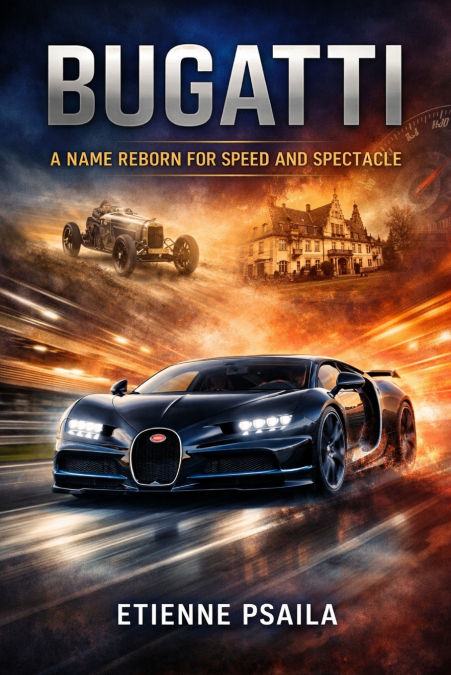
Bugatti is one of the rare marques whose name can carry an entire idea: speed rendered as spectacle, craftsmanship elevated into identity, and engineering treated as a form of authorship. Yet its history is not a straight climb. It is a sequence of peaks, pauses, collapses, and rebuilds-each shaped by specific decisions inside workshops and boardrooms, and each leaving a paper trail of products, people, and outcomes.This book tells Bugatti’s story as a factual narrative of how an elite manufacturer operated, competed, exported, employed, survived disruption, and-when necessary-ceased building cars altogether. It follows the Molsheim tradition from the interwar years through postwar realities, the long dormancy when reputation outlived production, and the modern era when corporate backing turned an impossible specification into the Veyron, then into a platform strategy with the Chiron and beyond.Along the way, Bugatti becomes a business case study: how scarcity is engineered rather than endured, how special editions convert heritage into margin, how ownership structures shape technology access, and how compliance pressures force powertrain direction without surrendering the brand’s core promise. The result is an account of Bugatti as both machine and meaning-proving that the world’s most extreme cars are never only about horsepower, but about systems, discipline, and the economics of belief.