F.K. Sterling
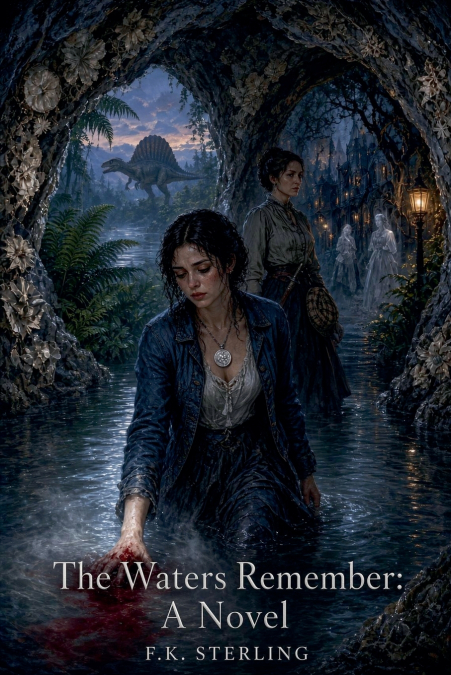
In the limestone heart of Eureka Springs, the spring does not forget.Isabel Menéndez comes to the grotto at dusk with blood on her palm and a dead woman’s silver medal burning against her skin. The water accepts both. When she steps knee-deep into the slowly turning silver, the surface splits. One reflection shows a Cretaceous forest thick with ferns and the distant sail of an Acrocanthosaurus. The other shows the same rocks and the same spring, but gaslit, black-leaved, and crowded with translucent ghosts.Behind her stands Delia, dressed in 1880s practical clothes, Thomas’s checked cap tucked into her belt and a knife at her hip. She has been waiting. The water has been waiting longer.Isabel is a paleontologist’s daughter who stopped believing in anything that could not be measured. The medal at her throat once belonged to Consuelo, a woman who vanished into these same waters a century ago and left only a name and a warning. Now the spring is rising. The two worlds that have always overlapped in its reflection are beginning to bleed through the stone flowers that stud the cave walls. Every time Isabel bleeds into the current, the boundary thins.Delia knows the cost. She has already paid part of it. The cap in her belt belonged to the man she loved; the knife is for whatever tries to follow them out of the water. She needs Isabel to finish what Consuelo started, but the spring does not bargain. It remembers every promise, every betrayal, every name spoken over its surface. And it is hungry for the rest of the story.As the grotto fills with cool moonlight and the warm spill of gaslight that should not exist, Isabel must choose which world she will save and which one she will let the water keep. The past is not past. The dead are not gone. And the spring, once it has tasted blood, does not return what it has taken.The Waters Remember is a gothic romantasy of dual timelines, fossil memory, and the terrible tenderness of places that refuse to let go.