Mark Linsenbardt
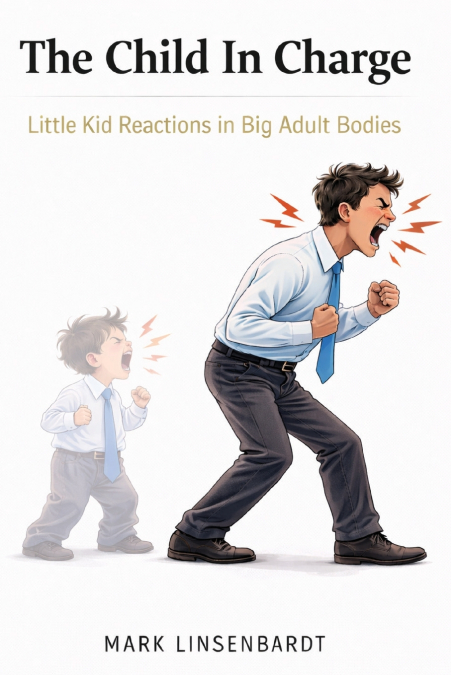
The last time you lost your temper over something small, went quiet when someone pushed you, or needed to be right even when you knew you were wrong, that wasn’t a character flaw. It was a childhood strategy, decades out of date, still firing anyway.Child in Charge explains why. During the years when behavioral patterns are being formed, the brain is building at extraordinary speed and operating without the prefrontal resources that would allow a child to pause, evaluate, and choose. The strategies that develop in that window, to get needs met, to stay safe, to hold a place in the world, get wired in, accelerated by myelin, and reinforced through repetition until they fire faster than conscious thought. By adulthood, most of us are operating programs that are twenty or thirty years old, in environments those programs were never designed for.The book is organized around three categories of strategies: those that use other people, those that protect the self, and those that keep us from stepping fully into adult life. It maps fifty-five specific behaviors across those three categories, where each came from, why it made sense when it was built, what it costs in the life we’re living now, and what the grown-up version of the same underlying need actually looks like.Science-grounded and written in plain language, Child in Charge gives readers a framework for understanding behavior, their own and everyone else’s, that doesn’t stop at the fifty-five behaviors named here. That framework is the point.