Inicio > Humanidades > Filosofía > Ética y filosofía moral > The Age of Systems in the Thought of Ivan Illich
The Age of Systems in the Thought of Ivan Illich

The Age of Systems in the Thought of Ivan Illich

Jean Robert / Edoardo McKenna

43,45 €
IVA incluido
Disponible
Editorial:
Equinox Publishing
Año de edición:
2026
Materia
Ética y filosofía moral
ISBN:
9781800508873
43,45 €
IVA incluido
Disponible
Añadir a favoritos

From the roads beneath our feet to the satellites overhead, from the news media that fills our minds to the social media that shapes our emotions, technology surrounds and permeates us. We are immersed in technology.But, if we are immersed in technology, can we still meaningfully speak of using it? That assumes a choice, a margin of freedom, the possibility to refuse. To use technology presumes that technology is still an instrument or tool external to us, which we may or may not pick up.Jean Robert challenges that presumption in this book. Drawing on Ivan Illich’s oeuvre, including his lesser-known essays and lectures, Robert proposes that Illich be understood not only as a critic of institutions or as a man of faith but preeminently as a historian of tools.Robert’s forty-year-long discussion with Illich on the question of technology lends credibility to his claim. In clearly signposted steps, he retraces how we have arrived at the post-instrumental age-an age in which tools have been transmogrified into systems and users have been reduced to sub-systems. The heart of this study is a measured assessment of Illich’s original claim: that technology understood as instruments is a Western idea with a beginning that is now coming to an end.Jean Robert was a close friend and intellectual interlocutor of Illich. This engagement with Illich’s 'last thoughts' is also Robert’s last book. As such, it is the final fruit of a life devoted to serious conversations in the company of friends.
Artículos relacionados

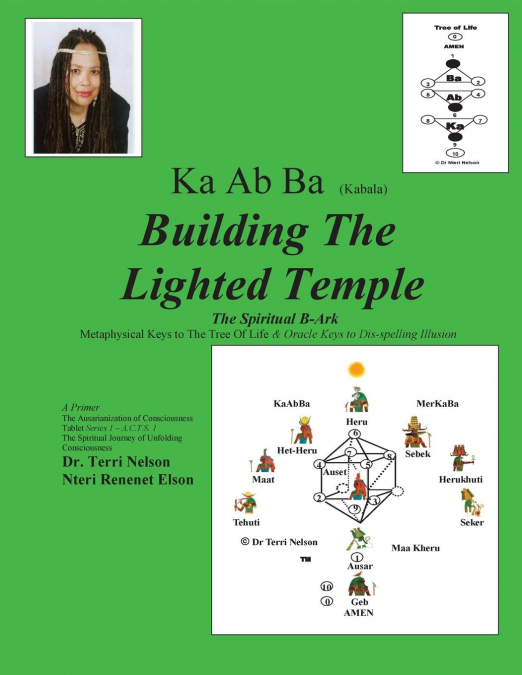
  • Ka Ab Ba Building The Lighted Temple
    Dr Terri R. Nelson / Dr Terri RNelson
    The book KaAbBa Building The Lighted Temple/Metaphysical Keys to the Tree of Life draws a circle that is inclusive of the Afrikan origin of the Ancient Kemetic/Egyptian wisdom. It reveals the undeniable root and link of Ancient Africa to all the religious systems that would develop worldwide. This book is explosive in its power to convey the meaning of KaAbBa, the Medu Neter  (...
    Disponible

    37,41 €

  • Technoethics and the Evolving Knowledge Society
    Rocci Luppicini
    Recently, there has been a major push to rediscover the ethical dimension of technology across the sciences, social sciences, and humanities. Technoethics and the Evolving Knowledge Society: Ethical Issues in Technological Design, Research, Development, and Innovation examines human processes and practices connected to technology embedded within social, political, and moral sph...
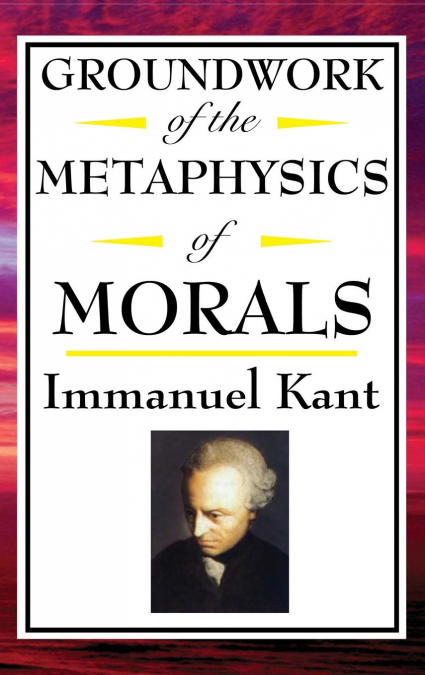
  • Kant
    Immanuel Kant
    Kant’s Groundwork of the Metaphysics of Morals is one of the most important works in modern moral philosophy. It belongs beside Plato, Aristotle, Machiavelli, and Hobbes. Here Kant sets out to articulate and defend the Categorical Imperative - the fundamental principle that underlies moral reasoning - and to lay the foundation for a comprehensive account of justice and human vi...
  • On the Duty of Civil Disobedience
    HENRY DAVID THOREAU
    Civil Disobedience argues that citizens should not permit their governments to overrule their consciences, and that they have a duty to avoid allowing their acquiescence to enable the government to make them the agents of injustice. Thoreau was motivated in part by his disgust with slavery and the Mexican-American War, but the sentiments he expresses here are just as pertinent ...
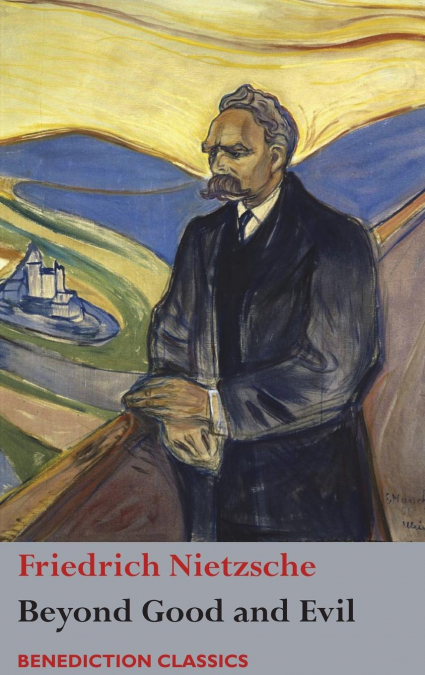
  • Beyond Good and Evil
    Friedrich Nietzsche
    Nietzsche, though primarily a philosopher, wrote widely on art, philology, history, religion, tragedy, culture, and science.  In 1886, at the height of his powers, he published Beyond Good and Evil.  Here he examines much of the best of human thought--dogmatic philosophy, Judeo-Christian morality, science and democracy – and finds it lacking.  Rejecting “slave-morality” he pres...
  • Beyond Good and Evil
    Friedrich Nietzsche
    Nietzsche, though primarily a philosopher, wrote widely on art, philology, history, religion, tragedy, culture, and science.  In 1886, at the height of his powers, he published Beyond Good and Evil.  Here he examines much of the best of human thought--dogmatic philosophy, Judeo-Christian morality, science and democracy – and finds it lacking.  Rejecting “slave-morality” he pres...
    Disponible

    9,99 €